What follows is a bunch of things I've kinda put together following the end of The Good Place season finale. If you've not watched The Good Place to the end, you've done yourself a terrible disservice and should fix that. Anyway, spoilers.
Showing posts with label tvtvtv. Show all posts
Showing posts with label tvtvtv. Show all posts
Saturday, January 21, 2017

Tuesday, August 11, 2015
Playing Humanity Straight: The Essentialist Philosophy of Star Trek
 When James T. Kirk encounters the man who would forever be known as his greatest villain, Khan Noonien Singh, we learn something about Earth history. In the late 20th century, humanity attempted to go beyond its physical limitations via genetic manipulation. The result was a breed of super-intelligent, super-strong people who had commensurate aggression and arrogance. The war between unaltered humans and these augments was the Eugenics War and it either caused or was a contributing factor to the world war that would send humanity into a post-apocalyptic dark age, only brought out by the work of Zefram Cochran. This caused all genetic manipulation to be banned in the Federation.
Fast forward a century or so and we learn that that ban has been slightly lifted. Genetic engineering is now acceptable as a corrective tool for people born with genetic defects. Enhancement beyond that is illegal and people who have been enhanced are second-class citizens at best and locked away at worst.
Consider also technological enhancement. Jean-Luc Picard has an artificial heart. Geordi LaForge has a visor that corrects his blindness. Yet we never see a single instance of a human who has used technology to augment their body in such a way that surpasses the limitations of a fully abled human. In fact, we have the Borg in stark contrast. More machine than biological, their individual abilities have surpassed any individual human but at the cost of individuality and freedom, rendering them nearly-unstoppable monsters.
Cloning is also questioned as being outside of the natural order of humanity. When the Enterprise-D encounters a lost colony who survived being wiped out via repeated cloning and the abandonment of sexual reproduction altogether, little effort is made to preserve their new entirely asexual culture. They are simply told to reproduce as per the biologically mandated norm in order to survive.
There's a common thread to all of these cautionary tales: there is a 'correct' humanity that needs to be preserved. Star Trek has often been hailed as an optimistic counterpoint to the tendency of sci-fi to pick holes in future tech and create doomsday scenario- but the show is actually quite clear in that it's only optimistic because humanity doesn't try to change essential aspects of its physiology. Indeed, there is an ideal human and technology is only there to 'raise' differently abled people to that standard and no further. Deviation from the biological norm is heavily discouraged.
With this in mind, it suddenly becomes even more dire that LGBTQ+ representation is practically non-existent on Star Trek and 100% non-existent among humans in Star Trek. The lack of representation takes a darker turn: perhaps it is this very basic essentialist view of humanity that precludes the existence of LGBTQ+ people. It's clear that the writers of Star Trek generally held this view- after all they wrote all of the cautionary tales of deviating from the norm. It doesn't take too much of a stretch to assume that this is also how they viewed LGBTQ+ people- a deviation to be discouraged and not represented. It seems as though, to the writers, this lack of representation in humanity is not a bug- it's a feature.
 Consider the cultures in Trek that exist outside of a cis hetero gender binary. The aforementioned clone colony from "Unnatural Selection", the agender species in "The Outcast", the three-sex species in "Cogenitor". They all have something in common: they're antagonists and their antagonism is directly related to the fact that Federation humans have a moral complaint related to what makes them different. In general, this complaint stems from the fact that these cultures engage in patriarchal actions, but twisted to fit the mold of their different sexuality. Is this a flipping of the narrative of the damage of the patriarchy or is this a defense of the correct cis hetero patriarchy? If there were an example of such a culture that was presented sympathetically, perhaps that question would be easier to answer.
But there lies the greatest disservice the Trek writers did to the show. They simply didn't present those stories. They didn't allow themselves to explore those margins of the human experience in a positive way. They took an essentialist stance- one that knew what 'humanity' was without question and treated everything else as inhuman- even if those features were something already found within humanity.
Picture mildly related.

Wednesday, June 17, 2015
Akira, Shakespeare, Whitewashing, and Racebending
The triannual threat from Hollywood to make a live-action Akira movie has once again reared its ugly head. In years past, it's always been made very clear that they intend to make an "American" version with an entirely white cast. This is, of course, horrible. Akira is a deeply Japanese manga. The culture described is based very firmly in Japanese youth culture of the era in which it was written. The plot is a reflection of cultural memory of the atomic bombings at Hiroshima and Nagasaki. Translating it into American culture is deeply problematic and difficult, and that's even assuming anyone involved gives even the slightest shit about doing any more than saying "It's set in Manhattan now, and everyone's white." Which is what's going to happen if this abomination ever gets made (it won't.)
But one of the arguments I see people make in favor of that treatment (and, horrifically, they exist) is that cultures all over the world get to do their own version of Shakespeare! That's something that's ours, as white people, dammit, why do they get to do it?
Oh my goodness, what an argument. Let's put aside the issue of cultural appropriation and its intrinsic ties to power differentials and colonialism- that colonialism impresses its own culture on other people's by choice and then steals from them by force and hegemonic pressure. I mean, that's a really big elephant to put aside, but I'm not the best at discussing that and it's not a topic people who would be making the Shakespeare argument would even believe in anyway.
I am, however, pretty good at discussing history, and motherfucker you just put Shakespeare and race in the same discussion so yes, let's discuss that.
There's two Shakespearean plays where a person of color is a prominent, even titular, protagonist: Antony and Cleopatra, and Othello. Of the two, Othello is the more interesting and is widely celebrated as one of his best tragedies. The 1965 film version is the single most critically rewarded film adaptation of a Shakespearean play. It's survived largely unchanged for over 400 years.
In it, Othello is a Moorish captain in Venice, in love with an Italian woman, while forces conspire to keep them apart, succeeding in tragic fashion (spoiler alert). Themes of racial and cultural divides are central to the story. Othello's actual racial identity is much debated, as the Moors were a very cosmopolitan people in Elizabethean times. Some contend he was of Arabic descent, others say he was of sub-Saharan descent- in any case he was certainly a person of color.
It probably goes without saying that Shakespeare did not actually cast a Moor as Othello. His players were 100% white English dudes, including the women (basically, they were Monty Python.) There's some debate as to whether Shakespeare had ever even met a Moor. So, naturally it was played in blackface. In fact, an actor of color did not play Othello until 1826- 261 years after it was written. Richard Burbage took the stage to play the Moor in London and his presence was about as well received as you can imagine:
And then, we come to Hollywood. You'd think, okay, the first black film actor to play Othello couldn't have come too long after the first American stage actor. Oh, gosh, you would think huh?
1995. Laurence Fishburne. That wildly celebrated 1965 version I mentioned earlier? Sir Lawrence Olivier in blackface. In Nineteen. Sixty. Goddamn. Five. That's only 50 years ago and he was nominated for an Oscar for his blackface.
So yeah. Let's goddamn bring Shakespeare into the race conversation, because it's not really helping the "WOO WHITE PEOPLE" side over here.
In more positive news, Neil Gaiman's American Gods is being adapted for TV by Bryan Fuller (creator of Dead Like Me, Pushing Daisies, and Hannibal). Production is starting as soon as they cast the protagonist- Shadow.
Like Othello, Shadow is described as having dark skin- certainly a person of color. He is however, left very racially ambiguous. Many people assume he's black, other people picture a more Hispanic character- I feel like he probably looks racially ambiguous, owing to the themes of America's role in taking the cultures and gods of immigrants and stripping them away into nothingness, forcing them to leave behind their identity.
At any rate, Fuller had this to say about casting him:
But one of the arguments I see people make in favor of that treatment (and, horrifically, they exist) is that cultures all over the world get to do their own version of Shakespeare! That's something that's ours, as white people, dammit, why do they get to do it?
Oh my goodness, what an argument. Let's put aside the issue of cultural appropriation and its intrinsic ties to power differentials and colonialism- that colonialism impresses its own culture on other people's by choice and then steals from them by force and hegemonic pressure. I mean, that's a really big elephant to put aside, but I'm not the best at discussing that and it's not a topic people who would be making the Shakespeare argument would even believe in anyway.
I am, however, pretty good at discussing history, and motherfucker you just put Shakespeare and race in the same discussion so yes, let's discuss that.
There's two Shakespearean plays where a person of color is a prominent, even titular, protagonist: Antony and Cleopatra, and Othello. Of the two, Othello is the more interesting and is widely celebrated as one of his best tragedies. The 1965 film version is the single most critically rewarded film adaptation of a Shakespearean play. It's survived largely unchanged for over 400 years.
In it, Othello is a Moorish captain in Venice, in love with an Italian woman, while forces conspire to keep them apart, succeeding in tragic fashion (spoiler alert). Themes of racial and cultural divides are central to the story. Othello's actual racial identity is much debated, as the Moors were a very cosmopolitan people in Elizabethean times. Some contend he was of Arabic descent, others say he was of sub-Saharan descent- in any case he was certainly a person of color.
It probably goes without saying that Shakespeare did not actually cast a Moor as Othello. His players were 100% white English dudes, including the women (basically, they were Monty Python.) There's some debate as to whether Shakespeare had ever even met a Moor. So, naturally it was played in blackface. In fact, an actor of color did not play Othello until 1826- 261 years after it was written. Richard Burbage took the stage to play the Moor in London and his presence was about as well received as you can imagine:
Unsurprisingly given the times, there was considerable resistance to the presence of the world's first black Othello. Eighteenth century London was the epicentre of Britain's pro-slavery lobby, and the press conducted a campaign of blatant racism against him. In one of his two Othello performances at the Covent Garden theatre in 1833, The Atheneum objected to actress Ellen Tree as Desdemona, being "pawed about on the stage by a black man." The Times newspaper had been just as scathing eight years prior, when it commented that, "Owing to the shape of his lips it is utterly impossible for him to pronounce English."Of course, this was England, where racial issues were certainly present, but not quite a fraught as in America. In fact, in America, a racially correct Othello wasn't seen until 100 years later in 1943, when Paul Robeson played the character.
And then, we come to Hollywood. You'd think, okay, the first black film actor to play Othello couldn't have come too long after the first American stage actor. Oh, gosh, you would think huh?
1995. Laurence Fishburne. That wildly celebrated 1965 version I mentioned earlier? Sir Lawrence Olivier in blackface. In Nineteen. Sixty. Goddamn. Five. That's only 50 years ago and he was nominated for an Oscar for his blackface.
So yeah. Let's goddamn bring Shakespeare into the race conversation, because it's not really helping the "WOO WHITE PEOPLE" side over here.
In more positive news, Neil Gaiman's American Gods is being adapted for TV by Bryan Fuller (creator of Dead Like Me, Pushing Daisies, and Hannibal). Production is starting as soon as they cast the protagonist- Shadow.
Like Othello, Shadow is described as having dark skin- certainly a person of color. He is however, left very racially ambiguous. Many people assume he's black, other people picture a more Hispanic character- I feel like he probably looks racially ambiguous, owing to the themes of America's role in taking the cultures and gods of immigrants and stripping them away into nothingness, forcing them to leave behind their identity.
At any rate, Fuller had this to say about casting him:
I think if we cast a white man to play Shadow we would be the biggest assholes on television...
One of the things I’m most excited about for American Gods is the diversity in the cast because there’s such a wide range of ethnic Gods in the world. Right now, we’re imagining two white roles and everybody else is non-white, so my goal, Michael’s goal, certainly Neil’s goal has been to have a very ethnically diverse cast. That’s important to all of us.Right. On.
Friday, May 22, 2015
A Second Chance for Diversity
Back in 2010 a social media grassroots campaign formed around the fact that Sony was rebooting the Spider-Man franchise. The idea: why not cast Donald Glover as Peter Parker? After all, the defining features of Peter are that he's smart, a bit of a nerd, but wise-cracking and fun. He grew up in a working class neighborhood in New York City, an orphan raised by his aunt and uncle. Also, he got bit by a scientifically improbable spider. Nothing about the character was defined by his skin color- he was white because he was created by white dudes in the early 60s, but that description could easily fit someone of pretty much any race- after all, it's NYC.
 In fact, that issue is something that has plagued comics. It was 40 years before Batman had a recurring black supporting character. Shakespeare's works have more prominent people of color than the original Justice League (or, for that matter, the current Justice League too.) The origins of nearly all popular comics come from a time where it was literally unthinkable to make a main character anything but white- simply put no one thought of it. Yet those characters and stories have endured for nearly 80 years in some cases and, while we live in an era where it's okay to reimagine Hamlet as a lion, it's not okay to reimagine Peter Parker as black.
Except while the Peter Parker campaign failed, not everyone in Hollywood is pushing against it. On The Flash, Iris West (pretty much originally conceived as "Hey, The Flash needs a Lois Lane") is played by Candice Patton. On the upcoming Supergirl show, Jimmy Olson is going to be played by Mehcad Brooks. We've seen our first glimpse of the new Hawkgirl in the season finale of the Flash- the Earth 2 version of Kendra Saunders, now represented by Ciara Renee. The (awesome) DC TV universe isn't the only place this is happening, either. Ben Urich in Daredevil was played by Vondie Curtis-Hall (brilliantly). Ultimate Nick Fury has been the MCU's most constant companion, and they very pointedly chose to pretty much make the Sam Jackson version the canon Nick Fury across all of their properties.
 Meanwhile, canon characters of color are being raised to greater prominence. Age of Ultron ended with Falcon and War Machine being part of the New Avengers. On Flash, Cisco Ramon (who was considered so offensively stereotypical in his original comic incarnation that artist George Perez refused to draw him) is a main character and extremely well liked by fans. Agents of SHIELD brought Daisy Johnson front and center.
It represents an attempt to say "Hey, for whatever reason (racism) these stories were completely white the first time they were told. Let's try again." And while it's far from perfect (notice how no one mentioned is the main character), it's better. It's an admission that the original stories came from a worse time for a lot of people- and that adapting them to a new medium means we can do better this time around.
 And, in turn, comics have started to try- at least Marvel has. The current comic Avengers include Ms. Marvel (aka Kamala Khan, a Pakistani-American from New Jersey), Nova (aka Sam Alexander, a Latino teenager from Arizona), and Miles Morales- the Ultimate Spider-Man inspired by the campaign to make Donald Glover Spider-Man.
 In fact, that issue is something that has plagued comics. It was 40 years before Batman had a recurring black supporting character. Shakespeare's works have more prominent people of color than the original Justice League (or, for that matter, the current Justice League too.) The origins of nearly all popular comics come from a time where it was literally unthinkable to make a main character anything but white- simply put no one thought of it. Yet those characters and stories have endured for nearly 80 years in some cases and, while we live in an era where it's okay to reimagine Hamlet as a lion, it's not okay to reimagine Peter Parker as black.
Except while the Peter Parker campaign failed, not everyone in Hollywood is pushing against it. On The Flash, Iris West (pretty much originally conceived as "Hey, The Flash needs a Lois Lane") is played by Candice Patton. On the upcoming Supergirl show, Jimmy Olson is going to be played by Mehcad Brooks. We've seen our first glimpse of the new Hawkgirl in the season finale of the Flash- the Earth 2 version of Kendra Saunders, now represented by Ciara Renee. The (awesome) DC TV universe isn't the only place this is happening, either. Ben Urich in Daredevil was played by Vondie Curtis-Hall (brilliantly). Ultimate Nick Fury has been the MCU's most constant companion, and they very pointedly chose to pretty much make the Sam Jackson version the canon Nick Fury across all of their properties.
 Meanwhile, canon characters of color are being raised to greater prominence. Age of Ultron ended with Falcon and War Machine being part of the New Avengers. On Flash, Cisco Ramon (who was considered so offensively stereotypical in his original comic incarnation that artist George Perez refused to draw him) is a main character and extremely well liked by fans. Agents of SHIELD brought Daisy Johnson front and center.
It represents an attempt to say "Hey, for whatever reason (racism) these stories were completely white the first time they were told. Let's try again." And while it's far from perfect (notice how no one mentioned is the main character), it's better. It's an admission that the original stories came from a worse time for a lot of people- and that adapting them to a new medium means we can do better this time around.
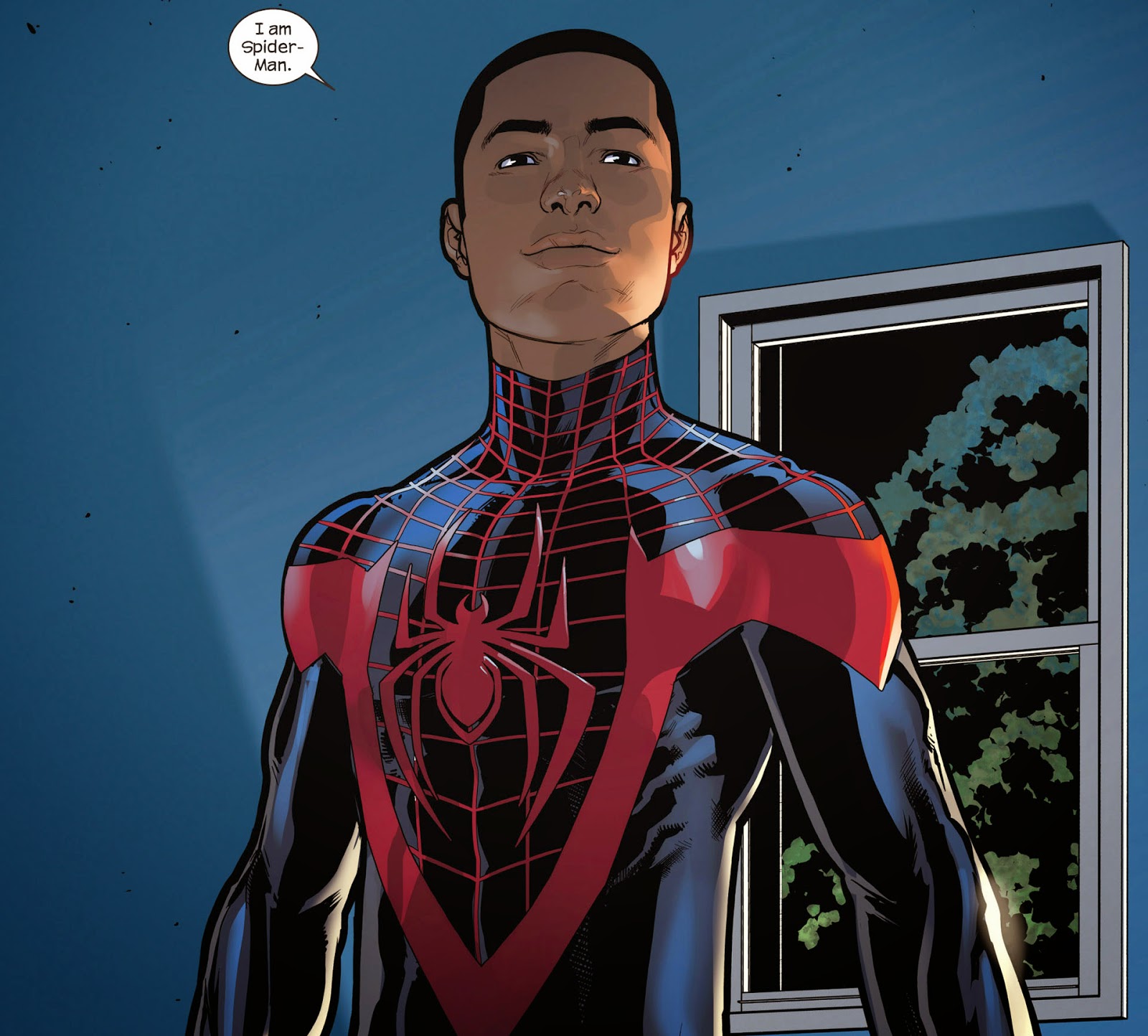 And, in turn, comics have started to try- at least Marvel has. The current comic Avengers include Ms. Marvel (aka Kamala Khan, a Pakistani-American from New Jersey), Nova (aka Sam Alexander, a Latino teenager from Arizona), and Miles Morales- the Ultimate Spider-Man inspired by the campaign to make Donald Glover Spider-Man.
 Tuesday, July 8, 2014
Thursday, May 29, 2014
TVTVTV - Catching Up
The spring TV season is over and that can only mean one thing:
WATCH ALL THE THINGS I'VE BEEN FAILING TO WATCH
Playing House- A pretty simple sitcom from Jessica St. Clair and Lennon Parham, two women who are always hilarious on Comedy Bang! Bang! as eternally teenaged intern Marissa Wompler(womp it up!) and her "gifted" teacher Miss Listler. It's not particularly challenging or inspired- it's just fun and funny. Since Bridesmaids came out, there's been a lot of tendency toward making comparisons to it whenever funny women get to make their own show/movie. In this case, it's reasonably apt. It doesn't tend toward the gross-out aspects of Bridesmaids, but it has the same sort of fun energy of getting to constantly screw up and find your way with your best friend.
Hannibal- The first episode of Wonderfalls begins with a myth: the legend of the "Maid of the Mist" who leaps off of Niagara Falls to her death to "surrender to destiny." Since then, death has followed Bryan Fuller's work. Dead Like Me dealt with the loneliness of death- both the emptiness for those who were left behind but the loneliness for the dead themselves. More memorably, Pushing Daisies reveled in the joy of getting a second chance and leaving fond memories of the dead behind- the cinematography and special effects making it quite possibly one of the happiest TV shows ever produced.
Hannibal, then, deals with the utter shock and horror of death. Bryan Fuller has grown to be a master of his craft and Hannibal might be his magnum opus. Where Pushing Daises used the screen to elicit joy, Hannibal uses it to inspire terror and dread. Death is brutal and the effects are haunting. The people who relish in it are not sociopathic anti-heroes, like Anthony Hopkin's Lecter sometimes came across as, they are figures of inhumanity who torment the main character and the viewer. As much as Pushing Daisies was pure happiness, Hannibal is pure fear and it is phenomenal.

Orange is the New Black- The most interesting thing about Lost was never the island. It might have taken a disappointing ending to get people to admit that, but the truth was that Lost told us that from the second episode. Lost was a show that had such complete and utter faith in having interesting characters with interesting stories that from the second episode, it committed to that in its format: making each episode resolve around a character and their lives in flashback, intertwining with their struggles on the island. Lost was not a show about a mysterious island, it was a show about the people on it.
Orange is the New Black is not a show about a prison, it's a show about the women in it. It takes Lost's format and makes it work even more beautifully. Because we get to see the stories of these other women in the prison without having to get it filtered through the bog standard story of the privileged white person learning about other people and accepting them. Their stories are told unfiltered. Their lives are laid bare- the things they did that lead them to become prisoners. And they are good stories, told honestly.
For a long time I thought shows that Netflix produced were probably just gonna be like HBO shows, but not compelling enough to get to be on HBO. OitNB definitely blows that away: it's not on HBO because HBO isn't brave enough to have a show like it. Funny, decidedly feminist, and uncompromising. HBO is the place where A Song of Ice and Fire apparently needs more tits and more rape to make it interesting.
Also, Kate Mulgrew is incredibly badass.
WATCH ALL THE THINGS I'VE BEEN FAILING TO WATCH
Playing House- A pretty simple sitcom from Jessica St. Clair and Lennon Parham, two women who are always hilarious on Comedy Bang! Bang! as eternally teenaged intern Marissa Wompler(womp it up!) and her "gifted" teacher Miss Listler. It's not particularly challenging or inspired- it's just fun and funny. Since Bridesmaids came out, there's been a lot of tendency toward making comparisons to it whenever funny women get to make their own show/movie. In this case, it's reasonably apt. It doesn't tend toward the gross-out aspects of Bridesmaids, but it has the same sort of fun energy of getting to constantly screw up and find your way with your best friend.
Hannibal- The first episode of Wonderfalls begins with a myth: the legend of the "Maid of the Mist" who leaps off of Niagara Falls to her death to "surrender to destiny." Since then, death has followed Bryan Fuller's work. Dead Like Me dealt with the loneliness of death- both the emptiness for those who were left behind but the loneliness for the dead themselves. More memorably, Pushing Daisies reveled in the joy of getting a second chance and leaving fond memories of the dead behind- the cinematography and special effects making it quite possibly one of the happiest TV shows ever produced.
Hannibal, then, deals with the utter shock and horror of death. Bryan Fuller has grown to be a master of his craft and Hannibal might be his magnum opus. Where Pushing Daises used the screen to elicit joy, Hannibal uses it to inspire terror and dread. Death is brutal and the effects are haunting. The people who relish in it are not sociopathic anti-heroes, like Anthony Hopkin's Lecter sometimes came across as, they are figures of inhumanity who torment the main character and the viewer. As much as Pushing Daisies was pure happiness, Hannibal is pure fear and it is phenomenal.
Orange is the New Black- The most interesting thing about Lost was never the island. It might have taken a disappointing ending to get people to admit that, but the truth was that Lost told us that from the second episode. Lost was a show that had such complete and utter faith in having interesting characters with interesting stories that from the second episode, it committed to that in its format: making each episode resolve around a character and their lives in flashback, intertwining with their struggles on the island. Lost was not a show about a mysterious island, it was a show about the people on it.
Orange is the New Black is not a show about a prison, it's a show about the women in it. It takes Lost's format and makes it work even more beautifully. Because we get to see the stories of these other women in the prison without having to get it filtered through the bog standard story of the privileged white person learning about other people and accepting them. Their stories are told unfiltered. Their lives are laid bare- the things they did that lead them to become prisoners. And they are good stories, told honestly.
For a long time I thought shows that Netflix produced were probably just gonna be like HBO shows, but not compelling enough to get to be on HBO. OitNB definitely blows that away: it's not on HBO because HBO isn't brave enough to have a show like it. Funny, decidedly feminist, and uncompromising. HBO is the place where A Song of Ice and Fire apparently needs more tits and more rape to make it interesting.
Also, Kate Mulgrew is incredibly badass.
Friday, October 25, 2013
One, Two Sitcoms Stand Before You
The Mindy Project
I was pretty excited for the Mindy Project. I like Mindy Kaling a lot and giving her a show seemed like a really fantastic idea. The show has always had some structural problems (too many completely undeveloped characters, not enough time) but this season, I've got a grump.
As the last season progressed, it tried to fix the too many characters problem by slowly bleeding out some of the extraneous ones. For example, Mindy's best friend Gwen (Anna Camp) who gradually went away in favor of oh I guess Mindy doesn't have any female friends anymore or the uncommented on exit of the other administrative assistant Shauna (Amanda Setton). Okay, fine. It's not so bad, there's still Betsy and Beverly and they added Tamra to sort of take Shauna's place, but funnier.
Then this season, they decided they needed another male doctor on top of the two who had always been there and Morgan, the nurse. Also, all of the female characters who aren't Mindy? You'd be lucky to notice more than one of them in the background. Suddenly, the show became Mindy and a bunch of dudes. And then the last episode was basically about how Mindy needs to just learn to deal with the fact that there are a bunch of dudebros around her, constantly giving her crap about being female, and you know what, they're just guys, let them be guys who cares.
So I'm grump there.
But then
Brooklyn Nine-Nine
I'm not so grump! New show from the creators of Parks and Recreation, starring another SNL alum, Andy Samberg. In general, I don't like Samberg. His comedy is too big and too obnoxious, like so many SNL performers before him (Adam Sandler, Will Ferrell, etc.) but he's been expertly constraned to "big enough to be funny" in this show. Then there's the rest of the cast: it actually looks like what you'd expect from a New York police precinct in terms of diversity. It's legitimately an entire sitcom cast without a single WASP member in casting or in character and the show doesn't even play it off as a big deal. The requisite no-nonsense police captain is that way because he spent 20 years being pushed around as an openly gay man in the NYPD and now that he's been given a command, he refuses to let anyone screw it up. Loving it.
Which is almost secondary to the fact that it's actually really enjoyable from the word go. P&R took a while to reach its stride, but B99 is pretty funny to begin with, with tons of obvious potential moving forward. The characters are immediately identifiable and memorable and they play off each other so well that literally any combination is fun to watch. Easily my favorite new show of the season.
Which means it will be cancelled.
TVTVTV
I was pretty excited for the Mindy Project. I like Mindy Kaling a lot and giving her a show seemed like a really fantastic idea. The show has always had some structural problems (too many completely undeveloped characters, not enough time) but this season, I've got a grump.
As the last season progressed, it tried to fix the too many characters problem by slowly bleeding out some of the extraneous ones. For example, Mindy's best friend Gwen (Anna Camp) who gradually went away in favor of oh I guess Mindy doesn't have any female friends anymore or the uncommented on exit of the other administrative assistant Shauna (Amanda Setton). Okay, fine. It's not so bad, there's still Betsy and Beverly and they added Tamra to sort of take Shauna's place, but funnier.
Then this season, they decided they needed another male doctor on top of the two who had always been there and Morgan, the nurse. Also, all of the female characters who aren't Mindy? You'd be lucky to notice more than one of them in the background. Suddenly, the show became Mindy and a bunch of dudes. And then the last episode was basically about how Mindy needs to just learn to deal with the fact that there are a bunch of dudebros around her, constantly giving her crap about being female, and you know what, they're just guys, let them be guys who cares.
So I'm grump there.
But then
Brooklyn Nine-Nine
I'm not so grump! New show from the creators of Parks and Recreation, starring another SNL alum, Andy Samberg. In general, I don't like Samberg. His comedy is too big and too obnoxious, like so many SNL performers before him (Adam Sandler, Will Ferrell, etc.) but he's been expertly constraned to "big enough to be funny" in this show. Then there's the rest of the cast: it actually looks like what you'd expect from a New York police precinct in terms of diversity. It's legitimately an entire sitcom cast without a single WASP member in casting or in character and the show doesn't even play it off as a big deal. The requisite no-nonsense police captain is that way because he spent 20 years being pushed around as an openly gay man in the NYPD and now that he's been given a command, he refuses to let anyone screw it up. Loving it.
Which is almost secondary to the fact that it's actually really enjoyable from the word go. P&R took a while to reach its stride, but B99 is pretty funny to begin with, with tons of obvious potential moving forward. The characters are immediately identifiable and memorable and they play off each other so well that literally any combination is fun to watch. Easily my favorite new show of the season.
Which means it will be cancelled.
TVTVTV
Thursday, September 12, 2013
The Importance of Being Alton
Once upon a time in America, there was food and there was cuisine. Food was what everyone ate. You ate whatever your mother made or whatever your wife's mother taught her to make. It was generations of knowledge dedicated to making whatever you had palatable, refined over countless mealtimes and the hushed swapping of information in social circles. It was informed by your heritage and the slow degradation of your ancestral home's food culture into whatever fit into the American lifestyle and culture. Cuisine, though- cuisine was what you found in the restaurants. What you spent the big bucks on. And cuisine, quite literally, came from France. It was the result of decades of tinkering and thinking about food, the passionate pursuit of men who did nothing but cook, turning ingredients into something bigger and better through some magic sorcery you had to go to France to learn. It was cooking in its purest form.
Then World War 2 happened. We sent our men away, halfway across the world, and all we gave them was something not quite food in little tins. So when they had the opportunity to eat something that didn't come from a little tin, they took it. And suddenly, they realized what else was food. The Italians, the Japanese, the Chinese, the Germans, the Spanish, the Turks...all of those minorities back home? They also had food. And it tasted good. Here, outside of America, that food was still pure and delicious. It wasn't cuisine, either. You didn't need black magic to make it. So they came back, much to everyone's surprise, with those memories of different food lingering. American food could be more and they demanded more. Sure, they molded it back to fit America- no food survives the trip to the New World. But it was different. Things were changing.
 Then, enter The Woman. Quite literally a giant in American culinary history, someone every American cook speaks of with fondness and reverence- Julia Child. Smart and curious, she looked at cuisine and said- "Why, this is just food. Anyone can make this, right?" Pan in one hand, wine in the other, she tried to prove it. And with a book and a TV show, she came into American homes and said "You can cast the secret spells of the French. You can make cuisine." And America believed her and begin to do real French cooking in their own homes. You didn't need restaurants- you just needed tenacity and a will to cook. But still, there was magic in that cooking. After all, Julia could put a turkey in the oven, then pull it out fully cooked!
And that's how it stayed for decades. Slowly, the rest of the world seeped into America's kitchens and restaurants and we watched Julia and a handful of other people cook on TV, learning the secret recipes to make better food at home. They were the gatekeepers and translators of those secrets and only those willing to be lectured to and figure it out as they went could really access it.
So, a guy from Georgia with a film degree and a culinary school degree thought it would be fun, maybe, to make a cooking show with more interesting angles. Maybe throw some history and science into the mix. Do a bit more than just give a recipe and prepare it while a fully cooked version is sitting in the oven.
 Maybe Alton Brown understood what he was doing, maybe he didn't, but it had one major effect: he killed the magic and the mystification. There was science behind making a roux. There's a reason you cook it for a particular time and you prepare it in the order you do. There was no magic in that sludge to thicken your sauce. There was no French god deciding you had done the ritual correctly. It was learnable and even something easy to intuit. And with a gift for entertainment and a desire to actually teach people, Alton recreated America's kitchens. He gave America the vocabulary and knowledge to understand the reality of food- that cuisine might require more finesse, patience, and knowledge, but that's not inaccessible to you. You can use not just the same recipes, but the same techniques in your own kitchen. You can not just cook- you can create. Have fun.
Good Eats might be one of the single most important pieces of American culture in the last 20 years. Before Good Eats, there were food critics, the people who spent their lives learning about food and flavor and telling other people what to think, but now everyone is a foodie- loving to eat, loving to explore a culinary landscape that's been blown wide open. Before Good Eats, the Food Network was a ridiculous concept- who wants to watch people make recipes for 24 hours a day? After Good Eats, there are culinary shows on even the broadcast networks- on top of Food Network being so successful that they had to create a spinoff network just to have the people standing around cooking again.
So, when I listen to his podcast, I realize that Alton hasn't really stopped there with Good Eats. Each episode, he talks to celebrity chefs and cooking show contestants and he's once again doing something vital and unprecedented: he's giving access to the major figures of a culture he was instrumental in creating and breaking down the barriers of even the new food world. Talking one-on-one with Bobby Flay or Geoffery Zakarian, not in the context of "let's have a serious interview, please tell me about your new show," but as a real conversation to bring them to the levels of humans whose profession you love to watch on TV and whose skills you want to mimic in your home. They're fascinating, yes, but again...they're not magicians. And he's having these conversations about the impact of food and food culture not in edited sound bites, but in real, interesting discussions. And maybe it's an accident or design, but roughly half of each episode of the Alton Browncast is devoted to a major figure of the food world, while the other half is devoted to talking to his audience directly via phone or email, and Alton has once again positioned himself as a willing and eager bridge between the two. Maybe he's legitimately that brilliant in being a force of shaping the food culture of America or maybe he's just a dude with good ideas and some luck in being in the right place at the right time, but he has been, continues to be, and possible will be into the future, a driver of the culinary awakening that happened during this century.
Then World War 2 happened. We sent our men away, halfway across the world, and all we gave them was something not quite food in little tins. So when they had the opportunity to eat something that didn't come from a little tin, they took it. And suddenly, they realized what else was food. The Italians, the Japanese, the Chinese, the Germans, the Spanish, the Turks...all of those minorities back home? They also had food. And it tasted good. Here, outside of America, that food was still pure and delicious. It wasn't cuisine, either. You didn't need black magic to make it. So they came back, much to everyone's surprise, with those memories of different food lingering. American food could be more and they demanded more. Sure, they molded it back to fit America- no food survives the trip to the New World. But it was different. Things were changing.
 Then, enter The Woman. Quite literally a giant in American culinary history, someone every American cook speaks of with fondness and reverence- Julia Child. Smart and curious, she looked at cuisine and said- "Why, this is just food. Anyone can make this, right?" Pan in one hand, wine in the other, she tried to prove it. And with a book and a TV show, she came into American homes and said "You can cast the secret spells of the French. You can make cuisine." And America believed her and begin to do real French cooking in their own homes. You didn't need restaurants- you just needed tenacity and a will to cook. But still, there was magic in that cooking. After all, Julia could put a turkey in the oven, then pull it out fully cooked!
And that's how it stayed for decades. Slowly, the rest of the world seeped into America's kitchens and restaurants and we watched Julia and a handful of other people cook on TV, learning the secret recipes to make better food at home. They were the gatekeepers and translators of those secrets and only those willing to be lectured to and figure it out as they went could really access it.
So, a guy from Georgia with a film degree and a culinary school degree thought it would be fun, maybe, to make a cooking show with more interesting angles. Maybe throw some history and science into the mix. Do a bit more than just give a recipe and prepare it while a fully cooked version is sitting in the oven.
 Maybe Alton Brown understood what he was doing, maybe he didn't, but it had one major effect: he killed the magic and the mystification. There was science behind making a roux. There's a reason you cook it for a particular time and you prepare it in the order you do. There was no magic in that sludge to thicken your sauce. There was no French god deciding you had done the ritual correctly. It was learnable and even something easy to intuit. And with a gift for entertainment and a desire to actually teach people, Alton recreated America's kitchens. He gave America the vocabulary and knowledge to understand the reality of food- that cuisine might require more finesse, patience, and knowledge, but that's not inaccessible to you. You can use not just the same recipes, but the same techniques in your own kitchen. You can not just cook- you can create. Have fun.
Good Eats might be one of the single most important pieces of American culture in the last 20 years. Before Good Eats, there were food critics, the people who spent their lives learning about food and flavor and telling other people what to think, but now everyone is a foodie- loving to eat, loving to explore a culinary landscape that's been blown wide open. Before Good Eats, the Food Network was a ridiculous concept- who wants to watch people make recipes for 24 hours a day? After Good Eats, there are culinary shows on even the broadcast networks- on top of Food Network being so successful that they had to create a spinoff network just to have the people standing around cooking again.
So, when I listen to his podcast, I realize that Alton hasn't really stopped there with Good Eats. Each episode, he talks to celebrity chefs and cooking show contestants and he's once again doing something vital and unprecedented: he's giving access to the major figures of a culture he was instrumental in creating and breaking down the barriers of even the new food world. Talking one-on-one with Bobby Flay or Geoffery Zakarian, not in the context of "let's have a serious interview, please tell me about your new show," but as a real conversation to bring them to the levels of humans whose profession you love to watch on TV and whose skills you want to mimic in your home. They're fascinating, yes, but again...they're not magicians. And he's having these conversations about the impact of food and food culture not in edited sound bites, but in real, interesting discussions. And maybe it's an accident or design, but roughly half of each episode of the Alton Browncast is devoted to a major figure of the food world, while the other half is devoted to talking to his audience directly via phone or email, and Alton has once again positioned himself as a willing and eager bridge between the two. Maybe he's legitimately that brilliant in being a force of shaping the food culture of America or maybe he's just a dude with good ideas and some luck in being in the right place at the right time, but he has been, continues to be, and possible will be into the future, a driver of the culinary awakening that happened during this century.
Tuesday, September 10, 2013
Even More Star Trek
So, in TNG, Data is male. People constantly refer to him in the masculine and even as "Mr. Data." In fact, we even know he is "fully functional" thanks to Tasha Yar. This is, of course, despite him having no genetic masculinity at all: he is a robot. He has no Y chromosome- or any alien equivalent thereof. However, we can just accept that Data, despite having no genetic masculinity or capability of sexual reproduction, is male. The earliest and most fundamental episode dealing with his personhood, after all, is called "Measure of a Man". Why is it so fundamentally hard to accept this with people? No idea.
Random questions to ponder: would TNG have been any different if Data had remained agender and asexual? His maleness feels utterly default. It rarely comes into play, so I posit that if he had had no gender at all, the show would've been the same.
On the other hand, if he had been female, how different would the show have been? I feel like the female characters were done a rather large disservice on TNG as compared to other Star Trek shows (especially DS9) and that might've been helpful. But would a female Data be as heavily sexualized as, say, Seven of Nine, who had a very similar thematic journey to Data, but had to do it in a shiny catsuit with various crewmembers ogling her? Probably.
Just musings.
Random questions to ponder: would TNG have been any different if Data had remained agender and asexual? His maleness feels utterly default. It rarely comes into play, so I posit that if he had had no gender at all, the show would've been the same.
On the other hand, if he had been female, how different would the show have been? I feel like the female characters were done a rather large disservice on TNG as compared to other Star Trek shows (especially DS9) and that might've been helpful. But would a female Data be as heavily sexualized as, say, Seven of Nine, who had a very similar thematic journey to Data, but had to do it in a shiny catsuit with various crewmembers ogling her? Probably.
Just musings.
Saturday, September 7, 2013
Star Trek: TNG - Imzadi
In a fit of "oh my god, I love Star Trek and everything about Star Trek I'm so obsessed with Star Trek," I've started reading Star Trek novels. I've begun my quest with the one I found on the free book shelf at my library and immediately snatched up: Imzadi.
This is what the back of the book says the narrative is:
Sounds pretty decent, but, so far, it's wrong. Yeah, that's the plot of the bookends of the story, but really the main plot takes place during that "tempestuous love affair." Here's a bit more accurate description:
...I actually really love this book. It's great, because for once, I like Deanna Troi. She was such a non-entity on the TV show, inexplicably on the bridge because she had magic powers of uselessness and, as a character, was only created because Roddenberry demanded more tits- and only got half as many as he wanted. The only episode about her that was even good was "Face of the Enemy" which was done even better with Major Kira on DS9 in "Second Skin." But she's given so much more life and intelligence and character in this book...loving it. Also really enjoying the fact that it fleshes out Betazoid culture, since they basically had two major characteristics in TNG: they have magic powers and naked weddings. Way better in this book. This is basically the kind of thing I want to see more of as I undertake my nerd quest deep into Star Trek apocrypha: not fantasy stories, but pushing out the universe of Star Trek. It's something TNG did really terribly and DS9 did pretty well.
Reading about the Enterprise defeating some Borg or something is cool, but I want to know more history, more culture, more personality. Please don't fail me now, random authors who couldn't think of their own universe and just got to publish glorified fanfics.
This is what the back of the book says the narrative is:
Years before they served together on board the U.S.S. Enterprise, Commander William T. Riker and ship's counselor Deanna Troi had a tempestuous love affair on her home planet of Betazed. Now, their passions have cooled and they serve together as friends. Yet the memories of that time linger and Riker and Troi remain Imzadi - a powerful Betazoid term that describes the enduring bond they still share.
During delicate negotiations with an aggressive race called the Sindareen, Deanna Troi mysterious falls ill...and dies. But her death is only the beginning of the adventure for Commander Riker - an adventure that will take him across time, pit him against one of his closest friends, and force him to choose between Starfleet's strictest rule and the one he calls Imzadi.
Sounds pretty decent, but, so far, it's wrong. Yeah, that's the plot of the bookends of the story, but really the main plot takes place during that "tempestuous love affair." Here's a bit more accurate description:
Years before he served on board the U.S.S. Enterprise, Commander William Teabag Riker was a dudebro Starfleet lieutenant stuck serving on Betazed. Within a day of being there, he saw a girl naked at a wedding and immediately began to harass her incessantly, refusing to take no for an answer because he is So Alpha. Unable to get rid of him, Deanna Troi is forced to educate his dumb ass on empathy and mindfulness because every time he's around her all he does is stare at her butt and grin like a moron.
...I actually really love this book. It's great, because for once, I like Deanna Troi. She was such a non-entity on the TV show, inexplicably on the bridge because she had magic powers of uselessness and, as a character, was only created because Roddenberry demanded more tits- and only got half as many as he wanted. The only episode about her that was even good was "Face of the Enemy" which was done even better with Major Kira on DS9 in "Second Skin." But she's given so much more life and intelligence and character in this book...loving it. Also really enjoying the fact that it fleshes out Betazoid culture, since they basically had two major characteristics in TNG: they have magic powers and naked weddings. Way better in this book. This is basically the kind of thing I want to see more of as I undertake my nerd quest deep into Star Trek apocrypha: not fantasy stories, but pushing out the universe of Star Trek. It's something TNG did really terribly and DS9 did pretty well.
Reading about the Enterprise defeating some Borg or something is cool, but I want to know more history, more culture, more personality. Please don't fail me now, random authors who couldn't think of their own universe and just got to publish glorified fanfics.
Wednesday, August 28, 2013
The Only Post About Big Bang Theory I Will Ever Make
I've never enjoyed Big Bang Theory a whole lot. It has its moments, and when it actually does real nerd humor, not just humor about nerds, it does it pretty well. The premise just never held any promise, though. Four nerd stereotypes, broadly drawn and with very little real personality beyond NEEEERD and the ditzy blonde neighbor have adventures + a will they/won't they between lead nerd and ditzy neighbor. I don't think it was ever gonna work for me.
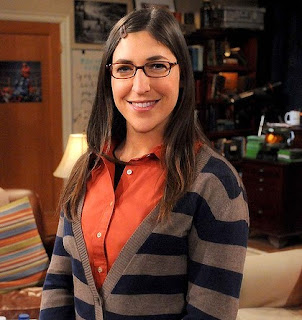 However, as it's been encroaching on my periphery, I've found that as the show has gone on, it has actually gotten quite a bit better. The core nerds haven't really evolved at all, they're still the same broad nerd caricatures. But what they did do was kind of ditch the "nerds can't get laid" part and added real female characters who, incredibly, are way better written than the core cast. In particular, Amy Farrah Fowler, as a character, provides such a great humanizing romantic foil for the ever-obnoxious Sheldon Cooper and manages to hit a lot of the same notes as Sheldon while genuinely seeming like a real person. I'm thoroughly impressed by it actually. Their subplot provides a much better hook to the show than the Leonard/Penny cliche stuff, in much the same way that Robin and Barney recentered How I Met Your Mother and made it a much more interesting show.
Basically, Big Bang Theory was saved, in my mind, by decently written female characters. Holy crap.
Also, it amuses the hell out of me that the only person on the show who is a real scientist who does real science with a real PhD is Dr. Mayim Bialik.

Basically, Big Bang Theory was saved, in my mind, by decently written female characters. Holy crap.
Also, it amuses the hell out of me that the only person on the show who is a real scientist who does real science with a real PhD is Dr. Mayim Bialik.
Monday, August 26, 2013
Re: Skyler White
A while back I posted my own little defense of Skyler White from Breaking Bad, which happens to be the most popular post I've ever made in terms of pageviews on account of terrible people searching terrible search terms.
Anyhow, at the end I asserted that the perception of Skyler isn't necessarily the fault of Vince Gilligan but rather the viewing audience being terrible and that she's actually pretty darn sympathetic from an objective POV. At the time, I wasn't sure if I should say that. Maybe I just wanted to be sympathetic to her and the show actually treats her as terrible as its audience and that Vince Gilligan is complicit in making her the villian.
Well, I recently found a quote from him saying this:
So, uh...basically, Vince Gilligan, fuck yeah. I love you man. I love your show. Thank you.
Anyhow, at the end I asserted that the perception of Skyler isn't necessarily the fault of Vince Gilligan but rather the viewing audience being terrible and that she's actually pretty darn sympathetic from an objective POV. At the time, I wasn't sure if I should say that. Maybe I just wanted to be sympathetic to her and the show actually treats her as terrible as its audience and that Vince Gilligan is complicit in making her the villian.
Well, I recently found a quote from him saying this:
We’ve been at events and had all our actors up onstage, and people ask Anna Gunn, “Why is your character such a bitch?” And with the risk of painting with too broad a brush, I think the people who have these issues with the wives being too bitchy on Breaking Bad are misogynists, plain and simple. I like Skyler a little less now that she’s succumbed to Walt’s machinations, but in the early days she was the voice of morality on the show. She was the one telling him, “You can’t cook crystal meth.” She’s got a tough job being married to this asshole. And this, by the way, is why I should avoid the Internet at all costs. People are griping about Skyler White being too much of a killjoy to her meth-cooking, murdering husband? She’s telling him not to be a murderer and a guy who cooks drugs for kids. How could you have a problem with that?
So, uh...basically, Vince Gilligan, fuck yeah. I love you man. I love your show. Thank you.
Friday, August 23, 2013
I hate you, Sigmund.
Last night I had a dream. In this dream, I was sitting in a classroom, I believe taking a history class. The professor sprung a test upon us- the topic? Battlestar Galactica. I knew I was ready and prepared to answer the questions. They were easy and one by one I scribbled down my answers. But the more I answered, the sloppier my writing got and he was going faster and faster, finally, he finished, but my page looked like nonsense. So I decided to get a fresh sheet of paper and recopy my answers more legibly. As I flipped past page after page of filled paper, I finally found some black pages. My pencil was dull, so I went to a sharpener- the badass superpowerful electric kind, and proceeded to sharpen the pencil. Naturally, as the pencil got sharper and sharper, it turned into a penis. Armed with the turgid instrument, I returned to the task at hand, only to end up with my papers covered in pee. I grew despondent and gave up on ever turning in the test. Fin.
Obviously Correct Analysis:
My subconscious placed me in this setting to highlight my frustration of never leaving school. It chose the test subject of TV(TVTV) as something I find effortless and interesting to only increase my frustration over the course of the dream. My inability to complete the test, even though I knew the answers, demonstrates a constant struggle to finish what is actually extremely easy to me. The transformation of the pencil into a penis suggests a subconscious connection between maleness and knowledge had once been formed, but the ultimate uselessness of this object in the pursuit of it suggests that all penises do is pee on things.
The pee represents pee. Don't pee on your coursework.
The fact that I just corrected a typo of pencil- 'mencil'- is hilarious.
Obviously Correct Analysis:
My subconscious placed me in this setting to highlight my frustration of never leaving school. It chose the test subject of TV(TVTV) as something I find effortless and interesting to only increase my frustration over the course of the dream. My inability to complete the test, even though I knew the answers, demonstrates a constant struggle to finish what is actually extremely easy to me. The transformation of the pencil into a penis suggests a subconscious connection between maleness and knowledge had once been formed, but the ultimate uselessness of this object in the pursuit of it suggests that all penises do is pee on things.
The pee represents pee. Don't pee on your coursework.
The fact that I just corrected a typo of pencil- 'mencil'- is hilarious.
Friday, June 7, 2013
A Meditation on the Cultures of Star Trek and Homosexuality
In a fit of boredom last night, I started thinking about A) how there's no characters of non-hetero sexuality in all of Star Trek and how annoyed that makes me which then made me start thinking about B) how would homosexuality be received in the weirdly uniform cultures of the various alien races that inhabit the alpha quadrant.
Humans: It's the goddamned 23rd-24th century in Star Trek. I think we've gotten to the point where it's normal and perfectly accepted by then. We've got 150 years, we can live up to that standard.
Vulcans: This is the one that really started me thinking. Socially, Vulcans seem like they'd be perfectly cool with it. They love deeply and, logically, it doesn't matter what gender the person you love is. Thus, the logical conclusion is that homosexuality would be perfectly acceptable in Vulcan society. BUT. Does pon farr require two people of opposite sex? Otherwise, there's gonna be some difficulty what with the whole going insane and trying to murder people if you can't get laid. IMPORTANT QUESTIONS.
Klingons: Klingons are extremely warlike, but also very egalitarian. Women are not subservient in Klingon culture, they are glorious warriors like their male counterparts. As such, in a culture that treats its women as equals, I see no reason why that same bond of violence and love can't happen between people of the same gender. Also, I mean, a bunch of Klingons drunk on blood wine and the victory of a glorious bloody battle seem like they'd be pretty likely to engage in victory sex and not really care too much about who is who anymore because they're all equally honorable in their victory.
Romulans: Oh my gosh, I have no idea. Have we even seen a heterosexual relationship between Romulans in Star Trek? Are they even capable of having relationships or do they just manipulate each other into having children? I don't even know. The concept of any sort of Romulan relationship is blowing my mind. That said, Romulan uniforms suggest a distinct lack of fashion designers in Romulan culture so uh maybe it's not a thing.
Trill: The only race to have a homosexual pairing in the history of Star Trek, albeit for only one episode. Joined Trills are two species: the host and the symbiote. The host is whatever sex and gender, but the symbiote is ungendered but has the memories of many people of many genders. Thus, joined Trills have no real problem with it: who cares? They've been all the genders. And if it's find with joined Trills, I'm sure it's cool with the unjoined ones too.
Ferengi: Ferengi are extremely non-egalitarian. Women are strictly subservient and it's all really pretty terrible. I'm having a hard time imagining a homosexual relationship in Ferengi culture as a result. It seems like men in Ferengi culture are constantly supposed to be competing with each other and, as such, a homosexual union would be looked down upon. Quark is the only character in Star Trek to have had some gay panic and I can see why. Ferengi are awful. Worst culture.
Cardassians: Hmm. Like Romulans, Cardassians are very manipulative and militaristic. But, unlike Romulans, there's a really big emphasis on family in Cardassian culture. Caring for your children and continuing your family line is paramount in Cardassian relationships, it seems. As such, I find it possible that unions that don't produce children would be frowned upon in Cardassian culture- homosexual or heterosexual. But it is a future society so maybe they're also fine with finding alternate means to do so?
Changlings/Founders: They don't have sexes. They seem to have some sort of gender but, as with everything they do, it's pretty fluid. They usually exist in a constant state of being in the galaxy's biggest space orgy. Not an issue.
Q: Uh. Yeah. Totally. I imagine the Q invent entirely new sexes and genders just to try to reinvent sex. I'm reasonably sure there has to be at least one Q whose entire life mission is to have sex with every single entity in the universe. They are the Q. They're like the Greek gods times 1000.
Humans: It's the goddamned 23rd-24th century in Star Trek. I think we've gotten to the point where it's normal and perfectly accepted by then. We've got 150 years, we can live up to that standard.
Vulcans: This is the one that really started me thinking. Socially, Vulcans seem like they'd be perfectly cool with it. They love deeply and, logically, it doesn't matter what gender the person you love is. Thus, the logical conclusion is that homosexuality would be perfectly acceptable in Vulcan society. BUT. Does pon farr require two people of opposite sex? Otherwise, there's gonna be some difficulty what with the whole going insane and trying to murder people if you can't get laid. IMPORTANT QUESTIONS.
Klingons: Klingons are extremely warlike, but also very egalitarian. Women are not subservient in Klingon culture, they are glorious warriors like their male counterparts. As such, in a culture that treats its women as equals, I see no reason why that same bond of violence and love can't happen between people of the same gender. Also, I mean, a bunch of Klingons drunk on blood wine and the victory of a glorious bloody battle seem like they'd be pretty likely to engage in victory sex and not really care too much about who is who anymore because they're all equally honorable in their victory.
Romulans: Oh my gosh, I have no idea. Have we even seen a heterosexual relationship between Romulans in Star Trek? Are they even capable of having relationships or do they just manipulate each other into having children? I don't even know. The concept of any sort of Romulan relationship is blowing my mind. That said, Romulan uniforms suggest a distinct lack of fashion designers in Romulan culture so uh maybe it's not a thing.
Trill: The only race to have a homosexual pairing in the history of Star Trek, albeit for only one episode. Joined Trills are two species: the host and the symbiote. The host is whatever sex and gender, but the symbiote is ungendered but has the memories of many people of many genders. Thus, joined Trills have no real problem with it: who cares? They've been all the genders. And if it's find with joined Trills, I'm sure it's cool with the unjoined ones too.
Ferengi: Ferengi are extremely non-egalitarian. Women are strictly subservient and it's all really pretty terrible. I'm having a hard time imagining a homosexual relationship in Ferengi culture as a result. It seems like men in Ferengi culture are constantly supposed to be competing with each other and, as such, a homosexual union would be looked down upon. Quark is the only character in Star Trek to have had some gay panic and I can see why. Ferengi are awful. Worst culture.
Cardassians: Hmm. Like Romulans, Cardassians are very manipulative and militaristic. But, unlike Romulans, there's a really big emphasis on family in Cardassian culture. Caring for your children and continuing your family line is paramount in Cardassian relationships, it seems. As such, I find it possible that unions that don't produce children would be frowned upon in Cardassian culture- homosexual or heterosexual. But it is a future society so maybe they're also fine with finding alternate means to do so?
Changlings/Founders: They don't have sexes. They seem to have some sort of gender but, as with everything they do, it's pretty fluid. They usually exist in a constant state of being in the galaxy's biggest space orgy. Not an issue.
Q: Uh. Yeah. Totally. I imagine the Q invent entirely new sexes and genders just to try to reinvent sex. I'm reasonably sure there has to be at least one Q whose entire life mission is to have sex with every single entity in the universe. They are the Q. They're like the Greek gods times 1000.
Tuesday, May 28, 2013
Sherlocked

So this week I went from having seen a couple of episodes of Elementary and thought "hey, pretty good" to now I'm done with 2/3 of the first season and anticipate being completely done by the end of the week.
Smarter people than I have already started to analyze how and why this show is really interestingly feminist. Not in a Buffy or Xena "girl power" kind of way that simply takes masculine aspects of power and glues them to a female character, then steps back and says "Look! Feminism! I want cookies!" but in a remarkable, organic way that reflects that the writers of this show think that this is genuinely how gender relations should work, in balanced, usually non-problematic ways.
So I'm not gonna talk about that much. What I also love is how distanced it is from the terrible trappings of other detective/mystery procedurals. Bones, CSI, Law and Order, Castle, Criminal Minds, etc. etc. etc. This is a well-mined genre and somehow this show has already found its place in the world by being so much the same just...better.
Treatment of Gender and Relationships thereof: My very first reaction upon hearing the premise of this show was dread. They were just taking the names of the most famous detective/assistant duo in history and adding a nice little heteronormative will they/won't they subplot like Moonlighting/X-Files/Bones/Castle by genderswapping Watson. They did not. Joan and Sherlock's relationship is organically fleshed out throughout this season, slowly transforming from one of hired companion/recovering addict to one of genuine friendship- and not an inch further. There's not even the slightest hint of sexual tension or romantic interest between the two of them. It's terrible that it's remarkable that two people of opposite gender can be the major leads on the TV show and NOT end up in a romantic relationship.
Treatment of Death and Gore: CSI and especially Bones revel in the shock value of having explicit gore and mutilated corpses. They love it. Bones begins pretty much every episode with the following scene:
Two people we won't see again in the episode are doing something (going on a hike, riding bikes, volunteering to clean up a beach, whatever). They're having an argument which causes one of them to do something without really paying attention to what they're doing. This causes them to uncover a mutilated, decayed corpse which explodes or falls on them or gets flung in every direction so that they're covered in viscera. Hahahaha gore.
Elementary doesn't linger on corpses. It rarely explicitly shows the injury and the people who are murdered are generally shown briefly and then never again. There is no morgue scene where we get their naked body laid out so we can watch them cut it open: we get Joan looking over the autopsy report a bit later if it's relevant. It acknowledges the violence, then is respectful and moves away from it.
Treatment of Criminals and the Accused: Part of the core premise of Criminal Minds is "Ooh. Serial killers! Sexy interesting stories!" Elementary does not glamorize crime. Sherlock himself has a great quote when faced with a serial killer who became a major media sensation because of a profiling detective's book: “You’ve met serial murderers, they’re duller than the queen’s
jubilee. Mouth-breathers and chronic onanists, the lot of them.” With the exception of the obvious archvillain, this is not a show interesting the mythologizing criminals and crime and often (and intelligently) takes large, convoluted cases that suggest some genius master villain and demonstrates that they're more easily explained by other means, often just by the fact that several different crimes are being incorrectly conflated into one big one.
That said, it also takes a different approach from dealing with the accused than Bones does, which is the show that I hate so much for it. People who are accused or feel like they're going to be accused get lawyers in this show. Because that's what you do. The police are confrontational, as would be natural because they're trying to get evidence, but they are not violent or cruel. Booth on Bones is often an angry, violent man who has tortured innocent people to get evidence (sometimes when they didn't even have it) and the show gives him a pass every time because he's the good guy. No one gets a free pass on Elementary- actions have consequences- but the 'good guys' rarely need it. That's why they're they good guys.
Treatment of Science and Technology: It's a minor point, but CSI and Bones have such a troubled relationship with reality that it hurts me. Elementary doesn't wrap its detective work in gadgets and terrible science. It doesn't get security footage and then "zoom, enhance, enhance, zoom, enhance". It doesn't create a GUI interface in Visual Basic, see if it can track an IP address. It respects that there are depths of science that someone like Sherlock doesn't know and that those depths? Probably really really goddamn irrelevant to solving a murder. There's a scene where Sherlock is comparing shell casings visually and the detective asks him why he's doing that, that the ballistics computers were working on it, and Sherlock just replies that the computers will take a while and the eye it a precision instrument unto itself and dammit he's completely right. A computer can do ballistics analysis, but a trained eye will be even faster.
Now, I'm not saying Elementary is perfect. But it is so good. I'm glad it's been actually successful, because I would've been very sad if this was the procedural that died when so many other terrible ones have succeeded.
Saturday, May 18, 2013
Skyler White is a Bitch

Heck of Breaking Bad spoilers up in here, through season 4.
If you type "Skyler White" into Google, Google will immediately suggest "Skyler White hate". If you actually do the search, it comes up with a Facebook page called "I Hate Skyler White" as one of the first possible links. If you go to QuickMeme and look up Skyler White memes, they are all talking about how she's basically the worst person ever.
Why?
Because Skyler White, as the internet so lovingly asserts, is a bitch.
Skyler White didn't accept her husband's resignation toward death as acceptable because she wanted him to live. As a result, he actually overcame his lung cancer. Skyler White felt like her husband was hiding things from her. She didn't trust his mysterious 'fugue state' or that he didn't have a second cell phone. It turns out he was hiding that he was a meth cook and a murderer. She kicked him out of the house because she didn't feel safe with him around her or her family. She was ostracized by her family because they felt she was acting crazy, when they didn't know the truth. She figured out a brilliant cover story to keep Walter safe in his lies. She created the 'legitimate' side of his business to keep everyone safe.
Total bitch.
Breaking Bad is a show about men. Men who do horrible things, in the pursuit of power, of money, of pride, of revenge. Men who are irrational, violent, and murderous. And it's enormously entertaining to watch them fall into this madness, to watch them became these horrible people as they attempt to outsmart each other.
The problem with Skyler is that she's the rational antagonist. A roadblock for the entertaining men. A logical, good person in the midst of the terrible things going on around her. And that's unacceptable. She's smarter than practically everyone else on the show. She's a masterful liar and phenomenal with numbers. She sees through bullshit like no one else on the show. And unlike the men, she's willing to sacrifice her happiness, her dignity, and her pride in order to keep her family safe. She is not the protagonist of Breaking Bad, but she may well be the hero.
Meanwhile, I can't help but wonder how people would react if the roles were reversed. Skyler doing everything Walt does, Walt doing everything Skyler does. Would Walt be as universally hated on the internet? Would Skyler be a beloved anti-hero? I doubt it. Because then Skyler would be a crazy bitch all over again and Walter would be the rational man trying to fix her messes.
I don't think the reaction to Skyler is Vince Gilligan or anyone's fault involved on the show, because I actually seem perfectly capable of watching the show and finding Skyler sympathetic and fantastic 95% of the time. The show never seems to assert that she is a problem. It's the viewers, the internet, the public who are judging her and deeming her a terrible woman.
We should be so lucky to live in a world full of Skylers.
Monday, May 13, 2013
TVTVTV - Week of May 5
I just now figured I might as well write about the various TV shows I watch each week, usually in one big mass of "Gosh I have some opinions" at the end of the week when I play catch up on the TV week. And what better week to do it than...the end of a week where there was practically nothing on TV because it's the end of the season. Yaaaaaaaaay!
Community - "Advanced Introduction to Finality"

When I think about this season of Community, a show I genuinely loved and considered to be one of the smartest sitcoms in ages, I think about Men in Black. The scene near the beginning when J and K are investigating the crashed Roach ship, and the farmer's wife talks about how Edgar went out to investigate it and when he came back, he wasn't the same, like there was a thing wearing an Edgar suit.
This show is now something wearing a Community suit. And just like in the movie, the suit is gradually decaying and looking worse and worse. The season finale just highlights it so much. Paintball fight. Darkest timeline. Movie reference. Jeff Winger speech. And finally, the four season character arc of Jeff, ended with a dream sequence and an unearned attempt at emotional payoff, even though a year ago it would've been fantastic.
And somehow, it got a fifth season. Maybe that's a good thing. Maybe something new and great can pop out of the Community suit's mouth and give the show a better sendoff than what was written. Maybe it'll just be a big bug and the writers will have to step on little cockroaches of references to distract viewers from what they really wanted. No wait, hold on. The show was the big roach in this metaphor. Maybe viewers are Will Smith? I don't know what the little roaches are then. Who was Tommy Lee Jones? Maybe viewers are Tommy Lee Jones and we've been eaten by the show! That sounds right. Let's go with that metaphor.
The Mindy Project - "Frat Party"

I continue to really, really want to like this show and this show continues to be...eh. I like Mindy Kaling! I think there's a good show here somewhere. I think it's amusing enough to watch every week and not hate myself for watching (unlike some terrible, awful shows about forensic anthropologists that will not be named, but the name refers to a part of the body that forms the hard structure and okay it's Bones goddammit I hate you Bones). But every episode tends to follow a formula of: there's the Mindy plot, where she is awkward but weirdly witty and insightful and has some situation with a guy she is dating or wants to date but then it goes back and they break up or almost break up. Then there's the other doctors plot, where Morgan is wacky and the other doctors are kinda grumpy and sardonic. And then at the end someone gets in a fight.
It's always progressing in the sense that Mindy's relationships at least get to come and go and be different each time which is good, but I feel like I've waited a season for this show to progress past the stage where it can't figure out what kind of show it wants to be. I've yet to feel invested in any damn thing going on at all. I think if this show felt more like it had more of Mindy (the real person) and her perspective it'd be better, but the other characters seem to want to demand screen time when they haven't earned it. Or heck, go the other way and just have wacky Morgan hijinks and stuff. But figure it out, man.
Modern Family - "My Hero"
A decent episode of Modern Family. I'm actually struggling to come up with anything to hate or praise about it. The show is four seasons in and I don't feel like it's progressed anywhere, but I do feel like it's at least as good as it was 2 years ago. Next season might be going somewhere decent with the Claire has a job storyline that seemed to pop out of nowhere and the Haley is going to college for realz this time thing. Maybe. But we'll see. Anyhow, I can't even seem to care enough to google a picture for it. Oh well!
Bob's Burgers - Season 2 Episodes 1-5

Season 2 of Bob's Burgers got put on Netflix this week. I'm not going to individually talk about each episode while I pop the top of delicious streaming on-demand media and shotgun hours of a prime-time cartoon, but I do want to say:
This show is freaking great. I watched the first season out of boredom a few months ago and, while it was slow to get going, the second season hits the ground running and it is just brutally hilarious. I feel really bad for this show, which genuinely loves the line between absurdity and an actual touching family sitcom, because it has to air every week nestled deep in the disgusting clutches of the Seth MacFarlane crap monster. It's probably the only prime-time cartoon in a long time to honestly challenge early Simpsons in its greatness.
Also, I love Tina and Louise on this show, but Gene has been killing it so far. "Channel Six news! They'll finger anything with a pulse!"
Oh no, wait. Bob telling his kids to act like they're his kids at the security guard who wouldn't let him in the arcade without children.
"We are your kids."
"Yeah, but...really rub his face in it."
then Louise
"He had sex and then we happened. DEAL WITH IT."
Okay.
Yes.
Done now.
Community - "Advanced Introduction to Finality"

When I think about this season of Community, a show I genuinely loved and considered to be one of the smartest sitcoms in ages, I think about Men in Black. The scene near the beginning when J and K are investigating the crashed Roach ship, and the farmer's wife talks about how Edgar went out to investigate it and when he came back, he wasn't the same, like there was a thing wearing an Edgar suit.
This show is now something wearing a Community suit. And just like in the movie, the suit is gradually decaying and looking worse and worse. The season finale just highlights it so much. Paintball fight. Darkest timeline. Movie reference. Jeff Winger speech. And finally, the four season character arc of Jeff, ended with a dream sequence and an unearned attempt at emotional payoff, even though a year ago it would've been fantastic.
And somehow, it got a fifth season. Maybe that's a good thing. Maybe something new and great can pop out of the Community suit's mouth and give the show a better sendoff than what was written. Maybe it'll just be a big bug and the writers will have to step on little cockroaches of references to distract viewers from what they really wanted. No wait, hold on. The show was the big roach in this metaphor. Maybe viewers are Will Smith? I don't know what the little roaches are then. Who was Tommy Lee Jones? Maybe viewers are Tommy Lee Jones and we've been eaten by the show! That sounds right. Let's go with that metaphor.
The Mindy Project - "Frat Party"

I continue to really, really want to like this show and this show continues to be...eh. I like Mindy Kaling! I think there's a good show here somewhere. I think it's amusing enough to watch every week and not hate myself for watching (unlike some terrible, awful shows about forensic anthropologists that will not be named, but the name refers to a part of the body that forms the hard structure and okay it's Bones goddammit I hate you Bones). But every episode tends to follow a formula of: there's the Mindy plot, where she is awkward but weirdly witty and insightful and has some situation with a guy she is dating or wants to date but then it goes back and they break up or almost break up. Then there's the other doctors plot, where Morgan is wacky and the other doctors are kinda grumpy and sardonic. And then at the end someone gets in a fight.
It's always progressing in the sense that Mindy's relationships at least get to come and go and be different each time which is good, but I feel like I've waited a season for this show to progress past the stage where it can't figure out what kind of show it wants to be. I've yet to feel invested in any damn thing going on at all. I think if this show felt more like it had more of Mindy (the real person) and her perspective it'd be better, but the other characters seem to want to demand screen time when they haven't earned it. Or heck, go the other way and just have wacky Morgan hijinks and stuff. But figure it out, man.
Modern Family - "My Hero"
A decent episode of Modern Family. I'm actually struggling to come up with anything to hate or praise about it. The show is four seasons in and I don't feel like it's progressed anywhere, but I do feel like it's at least as good as it was 2 years ago. Next season might be going somewhere decent with the Claire has a job storyline that seemed to pop out of nowhere and the Haley is going to college for realz this time thing. Maybe. But we'll see. Anyhow, I can't even seem to care enough to google a picture for it. Oh well!
Bob's Burgers - Season 2 Episodes 1-5

Season 2 of Bob's Burgers got put on Netflix this week. I'm not going to individually talk about each episode while I pop the top of delicious streaming on-demand media and shotgun hours of a prime-time cartoon, but I do want to say:
This show is freaking great. I watched the first season out of boredom a few months ago and, while it was slow to get going, the second season hits the ground running and it is just brutally hilarious. I feel really bad for this show, which genuinely loves the line between absurdity and an actual touching family sitcom, because it has to air every week nestled deep in the disgusting clutches of the Seth MacFarlane crap monster. It's probably the only prime-time cartoon in a long time to honestly challenge early Simpsons in its greatness.
Also, I love Tina and Louise on this show, but Gene has been killing it so far. "Channel Six news! They'll finger anything with a pulse!"
Oh no, wait. Bob telling his kids to act like they're his kids at the security guard who wouldn't let him in the arcade without children.
"We are your kids."
"Yeah, but...really rub his face in it."
then Louise
"He had sex and then we happened. DEAL WITH IT."
Okay.
Yes.
Done now.
Tuesday, March 19, 2013
Cars, Colonialism, and Clarkson

Usually, when I sit back and think about a TV show and deconstruct it in my mind and consider its social implications and just apply basic critical studies to it, it's well after the fact of watching it. When I ingest entertainment, I do it for the entertainment. I enjoy it or don't enjoy it based on pure emotional response and how well it creates it. Sometimes, though, the damn criticism keeps in during watching ti and I enjoy things less because of it. How dare thinking critically about something and its implications remove my enjoyment. Jerks.
Anyhow, it happened tonight with Top Gear. Top Gear is, usually, immensely entertaining to me, though I acknowledge its problems.
I mean, first, it's on the BBC. Which means it's partially funded by taxpayer money. Taxpayer money going into having three rich white dudes do stupid things with cars. I don't really have anything against taxpayer money going into stupid things. And a government could be doing way worse with its money than making a TV show- at least it's not killing anyone. Of course, it's not really saving anyone either. It could go into education or healthcare or infrastructure or any number of things. But, entertainment is something nearly every civilization has devoted a sizable about of time and money to. I'm not saying it's right or even okay, but shoot, it's hard to fight and if we stopped I'd have nothing to talk about anymore. So this problem hardly ever bothers me.
Second, the chaps are somewhat racist and xenophobic. This is just known as a matter of course. They got into a huge kerfuffle involving Mexicans a couple of years back and as least once a season they make some dumb comment. They have the kind of racist attitude that seems uniquely British- not any inherent belief in the inferiority of a different race, just a nationalistic belief that not being British is a terrible thing and you have some adorable flaw. Britain seems to exist with a sort of quantum nationalism: inerrant belief that Britain is best, while utterly despising being British. It's cute. Anyhow, they usually get called on it and make apologies and blah blah blah, everyone knows they're a bit daft. It's terrible, but rarely bothersome.
No, my problem rears its head rarely, but goes unacknowledged. See, they often have adventure episodes. And sometimes it's really cool, like when they were the first people to drive a car to the North Pole. Well done, nice show of automotive engineering. Or it's just good fun, like when they each bought a car for under $1000 in Miami and drove them to New Orleans, along the way painting their car with pro-gay, pro-Hillary slogans as they drove through rural Alabama- a decision which literally caused them to be hunted and followed by hicks in big scary trucks. Fun times. But this season's adventure was indicative of a worse problem.
They went to Africa, to find the source of the Nile River. Okay. Neat. Good adventure. Along the way, they praised Dr. Livingston and the great British adventurers who came before them. They drove through the Serengeti, exclaiming how beautiful it was and how could anyone be afraid to go to Africa. They enlisted the help of friendly locals who dug them out of ditches and push their cars through the deep mud to help them reach their glorious ending.
And, yet, there it is. Because those great and noble British adventurers did view these people as inferior. Maybe they didn't necessarily treat them as such, but they saw their land, their societies, and said "Neat! No one's ever explored this!" Then Europeans came in, found these people, on this land, with their societies, and said "Neat! This is ours now. Oh, you said this is yours? Okay. You're ours now too! Neat!" But that ended way back in the 20th century so it's probably not best to dwell on it. But then, Clarkson, Hammond, and May go out, willfully oblivious to A) the enormous privilege they get from being the descendants of the colonial powers, and B) that they basically do the same thing. Oh, how nice of the throngs of poor Africans to push the noble white men's cars. How quaint that they want biscuits and candy for their efforts, look at them crowd and push. Jolly good show. And then they find their invented source of the River Nile and proudly put up the Union Jack. In the middle of Tanzania. Well done lads. Well done, indeed.
Saturday, March 16, 2013
The Metaphor, Star Trek, and Social Justice

On November 22, 1968, Capt. James T. Kirk was forced to kiss Lt. Uhura by a race of sadistic telepaths. This was not the first interracial kiss on TV, but it's easily the one that sticks in the minds of the American public. The episode itself doesn't remark on this fact even once, the kiss is forced because there is no attraction between Uhura and Kirk: they are friends and he is her commanding officer, nothing more. The humiliation is inherent in the loss of agency and free will, not their respective races.
Everyone on set knew it was a big deal, though. NBC intentionally made them film an alternate version where Kirk refuses to kiss her out of fear from reprisal from Southern viewers. Shatner intentionally overacted the hell out of this version of the scene so that they had no choice but to go with the kiss. (Which, just stop and think for a moment, that means there's a level of Shatnerian overacting that's so over the top it's actually unairable. MINDBLOWING.) The show intentionally normalized something that parts of the society didn't want to be normal, and it did it without obscuring the issue, but also without making it a big deal. This is not amazing- it is normal. Deal with it.
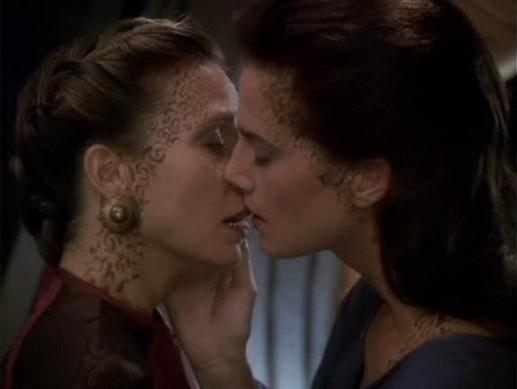
On October 30, 1998, Lt. Jadzia Dax kissed the woman she loved in a former life, Lenara Kahn. This was not the first same-sex kiss on American TV, but it was one of the first and one that ended up getting quite a lot of angry calls to Paramount. The episode, however, lets their relationship as a same-sex couple go unnoticed. The fact that they're two women? Unremarkable. Normal. However, it uses metaphor as a 'fuck you' to those would remark upon it. The entire episode revolves around social norms preventing the two from having a relationship. It's an intentionally thin metaphor, they're only not allowed to be together because of Trill taboos against starting relationships with people from past lives, but an effective enough one, because it lets the writers comment on the heartbreak of society keeping you from someone you love, while at the same time not adding any stigma to the real controversy.
However, Deep Space Nine had a problem with metaphor. The comically misogynist Ferengi episodes were...well, comic. The Ferengi come across as an unamusing parody of misogyny and patriarchy. "Look! They hate women so much they won't even let them wear clothes." So the episodes where feminism comes to Ferenginar also come off as equally satirical. There's no real life victory for the American woman when Moogie earns the right to wear clothes. That's already normal. The writers get to get their ya-yas out 'fighting the patriarchy' without attacking anything of substance and, in the process, made the entire subject seem ridiculous.

On February 5, 2003 Sub-Commander T'Pol was revealed to have an infectious disease called Pa'nar Syndrome. Pa'nar Syndrome is caused by mind melding(a practice stigmatized and derided in Vulcan culture at the time) with an infected Vulcan. This plotline came about from insistence up the chain of production command that all UPN shows have a plotline about the AIDS-HIV pandemic. So, instead of try to do anything directly, they framed it entirely as metaphor. And good lord, it was terrible. For one, they framed it as something that only comes from aberrant behavior, i.e. homosexual relations/mind melding. For two, they never even explain why this aberrant behavior might not be unusual at all, they just keep right on with that whole thing being unnatural (anyone remotely familiar with Star Trek will note that Vulcan mind melds are just a matter of course in every other series, but the episode, of course, doesn't acknowledge this because...because). By hiding behind a metaphor, not only is the effect of the intended acknowledgement of the AIDS pandemic weakened, but they manage to add stigma(haha! that's the name of the episode!) to an entirely different cause.
In the pursuit of social justice, metaphors can work. They can make people confront things they'd be defensive about if put bluntly. They can add power to a plot and underscore the issues at hand. But they can also be used as a shield, not just for protecting the writers/producers from controversy, but also protecting the public from acknowledging the reality of an issue.
Wednesday, March 13, 2013
Kindle Commercial
Last night, watching Chopped, as I'm wont to do when given unfettered access to cable TV, a commercial for the Kindle Paperwhite came on. It was cheesy, a man sitting on the beach, using his iPad, when an attractive woman sits next to him. She's using the Kindle and can read on the beach without glare! He talks to her about it and she explains how much better the Kindle is for reading, at which point he buys one with his iPad. He then turns to her and says "We should celebrate," perhaps somewhat suggestively as though he were hitting on her. She smiles and says her husband is bringing her a drink. Then the man says, "So is mine." They turn and there's two men at the bar who wave back at them.
Whoa wait.
What?
WHAT?
Did a nationally airing commercial for a major consumer electronic device just have a non-cliche married gay couple?! I buh...
America? Fuck yeah?
EDIT:
Apparently it's online, which is totally obvious that it would be in retrospect and I am dumb for not thinking of that.
Whoa wait.
What?
WHAT?
Did a nationally airing commercial for a major consumer electronic device just have a non-cliche married gay couple?! I buh...
America? Fuck yeah?
EDIT:
Apparently it's online, which is totally obvious that it would be in retrospect and I am dumb for not thinking of that.
Subscribe to:
Posts (Atom)